

How Much Does A Concrete Slab Cost In Australia
 Danielle
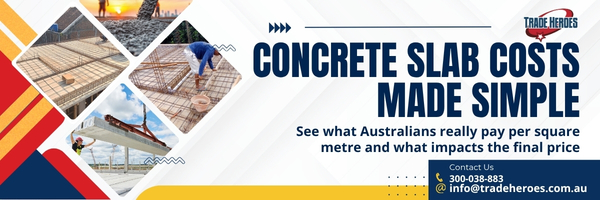
In Australia, a standard concrete slab cost usually ranges from $75 to $120 per square metre, with reinforced or more complex slabs often sitting between $110 and $150+ per square metre. Your final slab cost depends on project size, slab thickness, site preparation, concrete type and the concreting company you choose.
At Trade Heroes, we see concrete projects every day from homeowners, builders and renovators across Australia. Because we are a directory, our expert team compares real quotes from multiple concreters, so we know what is realistic, what is inflated and where you can save money without risking your foundation.
Average Concrete Slab Cost In Australia
The average cost of a concrete slab in Australia generally ranges from $70 to $120 per square metre, with most plain concrete slabs sitting around $75 to $110 per square metre. Decorative finishes and thicker slabs push costs into the $110 to $150+ per square metre band.
Typical Cost Per Square Metre
Plain concrete costs around $60 to $85 per square metre, while reinforced concrete ranges from about $65 to $90 per square metre.
Basic concrete slab ranges for materials and labour are:
- Spray on concrete slab: $50 to $75 per square metre
- Plain concrete slab: $60 to $85 per square metre
- Reinforced concrete slab: $65 to $90 per square metre
- Exposed aggregate finish: $100 to $150 per square metre
- Decorative finishes and polished concrete: usually plain concrete price plus $20 to $50 per square metre
Standard concrete slab costs in Australia generally sit between $75 and $110 per square metre for basic slabs, and between $110 and $150+ per square metre for thicker slabs with decorative finishes.
Typical Cost Per Cubic Metre
Concrete itself is usually priced per cubic metre, with the cost of one cubic metre of concrete in Australia often ranging from $200 to $300.
To convert to volume:
- To calculate the volume of concrete required, multiply the height by the length by the depth
- One cubic metre of concrete is equivalent to 1,000 litres
- It is wise to order around 10 percent more concrete than estimated to cover variations and wastage
Remember, concrete costs per cubic metre are only part of the total cost. Labour cost, reinforcement, prep work and margins all sit on top of the raw concrete required.
Example Costs By Slab Size And Thickness
The size of a concrete slab directly impacts the cost due to the amount of materials and labour required, and the thickness of a concrete slab affects its cost because thicker slabs need more concrete and more labour.
Using typical Australian per square metre rates:
- Small shed slab or cement slab at ground level, around 3 m x 3 m (9 m²):
- Approx. $650 to $1,000 for a basic plain concrete slab laid
- Single garage or larger projects around 6 m x 6 m (36 m²):
- Approx. $2,700 to $4,000 for a reinforced concrete foundation slab
- 10 m x 10 m slab (100 m²) for a workshop or house extension:
- Approx. $7,500 to $15,000 depending on thickness, rebar, mesh and decorative finishes
As mentioned earlier, concrete slab cost ranges from about $4 to $12 per square foot in the US and roughly $75 to $150+ per square metre in Australia.

Concrete Slab Costs By Type And Use
Concrete costs vary depending on whether you are pouring a house slab, shed slab, patio or driveway, because the structural elements, thickness and reinforcement change.
House Slabs
House slabs are foundation slabs that usually require engineering, thicker sections and more reinforcement, so they sit at the higher end of slab cost ranges.
These slabs often use reinforced concrete with beams, footings and sometimes suspended slabs or other structural elements. Expect to pay towards $110 to $150+ per square metre for complex house slabs in Australia.
Shed Slabs
A small shed slab is one of the most common types of concrete slab and is usually cheaper because it can often use minimum thickness and simpler reinforcement.
For a typical small shed, a plain concrete slab at 75 mm to 100 mm thickness might range from about $70 to $100 per square metre, depending on access and site preparation.
Patio And Alfresco Slabs
Patio and alfresco slabs sit in the middle, with price driven by project size and decorative finishes.
Many owners choose:
- Plain concrete for an affordable surface
- Coloured or exposed aggregate finish for a more attractive look
These slabs usually fall between $80 and $130 per square metre, depending on thickness and finish.
Driveway And Parking Slabs
Driveway slabs and parking pads cost more because they must handle vehicle loads and often use reinforced concrete with more steel.
Driveway slab cost will vary depending on:
- Thickness, often 100 mm or more
- Reinforcement with mesh or rebar
- Finish type, such as exposed aggregate concrete
It is common to see driveway concrete slab cost between $100 and $150 per square metre for exposed aggregate finish in Australia.
What Affects The Cost Of A Concrete Slab?
Concrete slab cost is driven by several factors, including slab size, thickness, site preparation, concrete type, reinforcement and local labour rates. These costs vary depending on your project.
Slab Size, Thickness And Design
Larger slabs and thicker slabs need more materials and more labour, so they cost more.
- More square metre area means more concrete, more steel and more finishing
- Increased thickness adds more concrete per square metre
- Complex shapes and levels add labour time
Basic slabs may cost between $4 and $8 per square foot, while reinforced or more complex slabs range from $5 to $12+ per square foot.
Site Access, Excavation And Preparation
Site conditions, including accessibility and ground preparation, can significantly influence the cost of a concrete slab.
Excavation and site preparation costs can vary depending on:
- How much soil or rock must be removed
- Whether machinery can access the site
- Whether the ground is already near level
Concrete pumping may be necessary for larger projects or tight access sites, often adding around $150 to $400 per hour to the total cost.
Concrete Strength, Mix And Finish
The type of concrete used affects the overall cost, with decorative finishes and specialised mixes being more expensive than plain concrete.
For example:
- Plain concrete starts around $60 per square metre
- Reinforced concrete usually costs $65 to $90 per square metre
- Exposed aggregate concrete can reach $100 to $150 per square metre
- Polished concrete or more decorative finishes may add $20 to $50 per square metre
The cost of concrete varies depending on the type of concrete used and the amount needed.
Reinforcement (Mesh, Bar, Piers)
Reinforcement, such as steel bars, rebar or mesh, is often required for structural support and can add to the cost of a concrete slab.
Foundation slabs, driveways and other heavy duty jobs often need:
- Heavier mesh
- Extra reinforcement in beams and edges
- Additional structural elements such as piers
These materials increase cost but protect the slab and the building above.
Location And Local Labour Rates
Location, local labour cost and demand all affect price.
The cost of a concrete slab in Australia can vary between cities and regions. Builder or contractor margins often add around 50 percent for overhead and profit to raw labour and material costs, and residential concrete slab cost is typically split 40 to 60 percent for materials and 40 to 60 percent for labour.
Concrete Slab Cost Breakdown
Every quote for a concrete project should break down the main cost parts so you can see where your money goes.
Design, Engineering And Approvals
Permits and inspection fees for concrete slab projects typically range from $100 to $1,000, depending on project size and council requirements.
You may also need engineering for structural slabs and inspections for footings and foundation.
Excavation, Formwork And Base
Excavation, formwork and base build the solid foundation under your slab.
Costs here cover:
- Site preparation and ground level adjustments
- Formwork to hold the slab shape
- Base materials such as crushed rock
Poor prep work often leads to cracks, so this is not an area to cut too much cost.
Concrete Supply And Pour
Concrete supply and pour costs include the concrete per cubic metre, delivery and placement.
To calculate the total square metres of concrete needed, multiply the height by the length of the area. To get the volume, multiply the height by the length by the depth. Using an online concrete calculator can help you get an accurate estimate for how much concrete you need and what the cost of concrete will be.
Finishing, Curing And Cuts
Finishing, curing and saw cuts protect the surface and help control cracking.
This part of the job covers:
- Screeding and finishing the surface
- Decorative finishes, if chosen
- Control cuts to manage shrinkage
These steps turn a basic cement slab into a clean, safe surface.
Labour, Equipment And Cleanup
Labour, equipment and cleanup make up a large share of the total cost.
Smaller jobs still need a full concreting crew, so price per square can be higher than for larger projects. Larger projects use more materials but can sometimes get better per square metre rates because fixed costs are spread over more area.
How Concrete Slabs Are Built Step By Step
Most concrete slabs follow the same basic steps from site preparation through to curing and use.
Site Preparation And Formwork
Site preparation and formwork shape the slab and create a solid foundation.
The concreting company will:
- Clear and level the ground
- Compact the base at ground level
- Build formwork to the correct thickness and surface height
Laying Reinforcement
Reinforcement is placed before concrete to strengthen the slab.
Common types of reinforcement include:
- Mesh for standard slabs
- Rebar for foundation work and thick slabs
- Extra reinforcement in high load structural elements
Pouring, Levelling And Finishing
The concrete is then poured, levelled and finished while still workable.
The crew will:
- Lay and spread the concrete
- Screed and trowel to create a smooth or textured surface
- Apply decorative finishes such as exposed aggregate finish where specified
Curing And When You Can Use The Slab
After pouring, the slab must cure before full use.
- Light foot traffic may be allowed after a few days
- Heavier loads like a car or house structure usually wait at least a week or more
Your concreter should give clear advice on when the slab can be covered or loaded.
Pros And Cons Of A Concrete Slab
A concrete slab is one of the most common types of foundation in Australia, but it is not ideal for every site.
Benefits Strength Durability Low Maintenance
Concrete slabs provide a solid foundation with high strength, durability and low maintenance.
They are:
- Strong under heavy loads when designed correctly
- Long lasting with minimal maintenance
- Suitable for house foundations, sheds, patios and driveways
Drawbacks Cost Cracking Poor Soil Or Drainage
The main drawbacks are cost, cracking risk and sensitivity to soil and drainage.
Slabs can:
- Cost more upfront than some lightweight options
- Crack if soil, drainage or reinforcement are not handled correctly
- Be harder to modify or repair than lightweight structures
When A Concrete Slab Is The Right Choice
A concrete slab is usually the right choice when you want a long term, stable surface for a house, shed, driveway or patio.
If your site has very poor soil or complex drainage issues, speak with an engineer or experienced concreter before you commit.
How To Save Money On Your Concrete Slab
You can reduce slab cost by managing project size, complexity and site preparation, while keeping key strength elements in place.
Smart Sizing And Design Choices
Project size is one of the biggest cost drivers, so start with the right footprint.
You can save money by:
- Only pouring the slab area you truly need
- Avoiding unnecessary steps and levels
- Matching slab thickness to the loads the surface will carry
Keeping Site Prep Simple Where Possible
Simple site preparation keeps labour and equipment costs in check.
Where safe and practical, you may:
- Clear small items from the site yourself
- Ensure good access for trucks and equipment
- Keep the design at ground level rather than split levels
Where Not To Cut Corners Base Steel Strength
Never save money by reducing base quality, reinforcement or concrete strength below what is required.
These elements protect your house or shed. Cutting them puts the whole project at risk and usually costs more later.
Hiring A Concreter For Your Slab
Picking the right concreter for the job is just as important as understanding cost.
What To Look For In A Concrete Slab Contractor
Look for a concreter with experience in the specific type of slab you need, such as driveway, shed or house foundation.
Check:
- Recent similar jobs and photos
- Reviews and references
- Insurance, licences and warranty policies
Getting And Comparing Itemised Quotes
Always ask for itemised quotes so you can see materials, labour, concrete and reinforcement separately.
Clear quotes help you compare total cost, understand other factors like pump hire and permits, and get accurate pricing that matches your project.
Concrete Slab Cost FAQs
How Much Does A Concrete Slab Cost Per Square Metre In Australia?
The average cost of installing a standard, plain concrete slab in Australia, including materials and labour, typically ranges from $75 to $150 per square metre, depending on thickness, finish and site conditions.
Basic slabs with a standard finish usually sit between $70 and $90 per square metre.
How Much Does It Cost To Pour A 20x20 Or 6x6 M Slab?
A 6 m x 6 m concrete slab has an area of 36 square metres, so at typical Australian rates you might expect to pay between about $2,700 and $4,000.
To calculate the total square metres, multiply the height by the length of the area, then multiply by the rate per square metre.
What Is The Cheapest Way To Pour A Concrete Slab?
The cheapest way to pour a concrete slab is to keep the design simple, use plain concrete, ensure good access and avoid over specifying thickness, while still using the correct reinforcement.
Smaller jobs with several factors in your favour, such as easy access and simple shapes, will usually be cheaper per square metre.
How Do I Estimate My Concrete Slab Cost?
To estimate cost, first calculate your area in square metres, then multiply by a realistic per square metre rate and add allowances for site preparation, reinforcement and decorative finishes.
You can also:
- Use an online concrete calculator to estimate concrete required in cubic metre
- Allow about 10 percent more concrete than the raw volume
- Remember that materials and supply often make up 40 to 60 percent of the total cost, with labour covering the other 40 to 60 percent
Concrete slab costs in Australia vary depending on size, thickness, site preparation, and the type of finish you choose — but understanding those variables helps you compare quotes properly rather than just on price per square metre alone. Whether you are pouring a small shed slab or a full house foundation, a qualified local concreter will assess your site and recommend the right approach for your project and budget. You can find local concreters through Trade Heroes in Perth, Sydney, Adelaide, Melbourne, Hobart, Brisbane, Canberra or Sunshine Coast.
Related Posts

Aug 01, 2025
 Danielle
House Painting Cost Guide
Understanding House Painting Cost: A Comprehensive Guide
Read more »
Aug 01, 2025
DanielleHow Much Do Blinds Cost in 2026
How Much Do Blinds Cost? A Comprehensive Breakdown for Every Budget
Read more »